Camber & Plumb
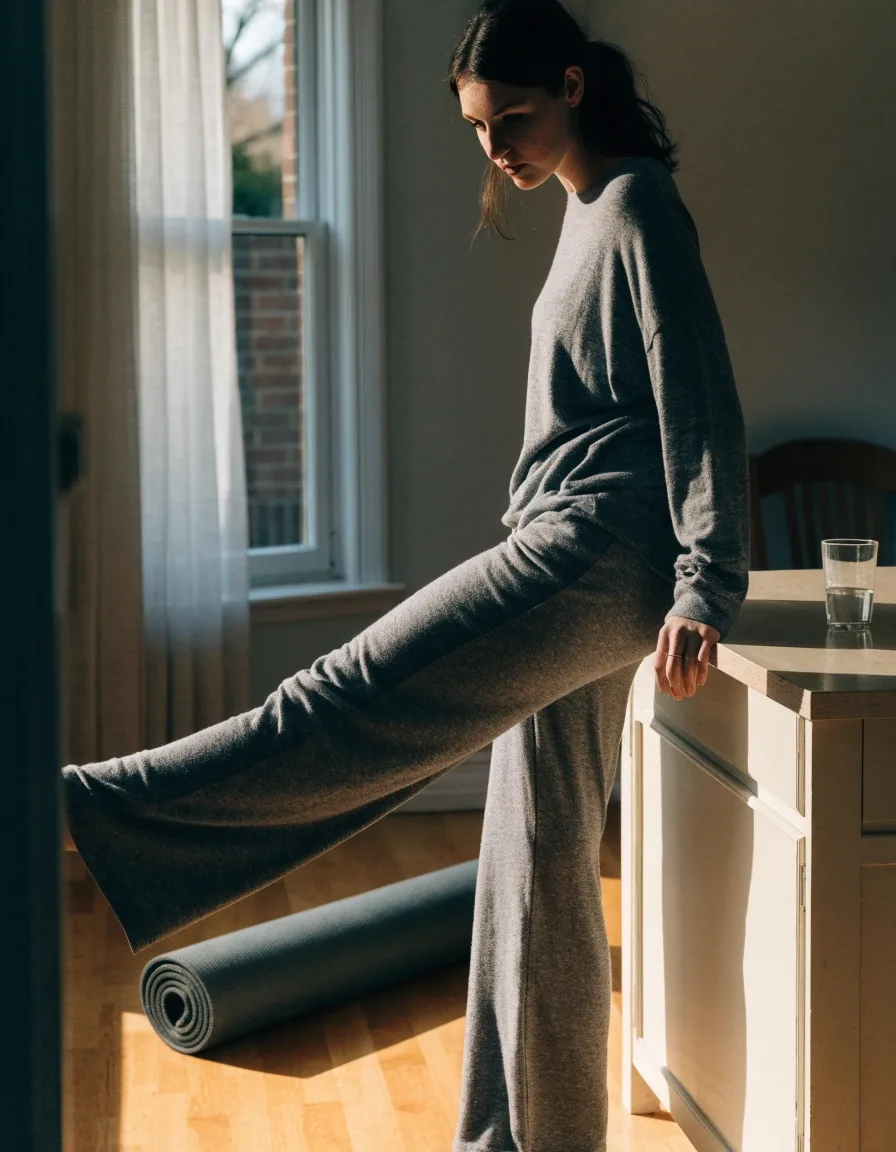
Woman balancing on one leg at a kitchen counter during a short morning movement routine

The daily ten

A ten-minute daily routine for easier motion

Hips, knees and ankles, done in ten minutes, repeated daily instead of once. Pair it with the capsule habit you already have and give both a few weeks.

Camber & Plumb · Movement
10 min

Repeat it tomorrow, not next Saturday.

Why movement comes first

If you sit for long stretches, the stiffness you notice in the evening has more to do with how little you have moved than with anything a capsule can fix on its own. Movement and a supplement are two separate inputs, and this page handles the movement side.

The routine below covers hips, knees and ankles — the areas readers of this guide mention most often. It is deliberately short so that repetition is realistic. Ten minutes daily beats an hour on Saturday, and natural joint care starts with the habit you actually keep. Pair it with whatever capsule you have settled on and give both a few weeks before you judge anything.

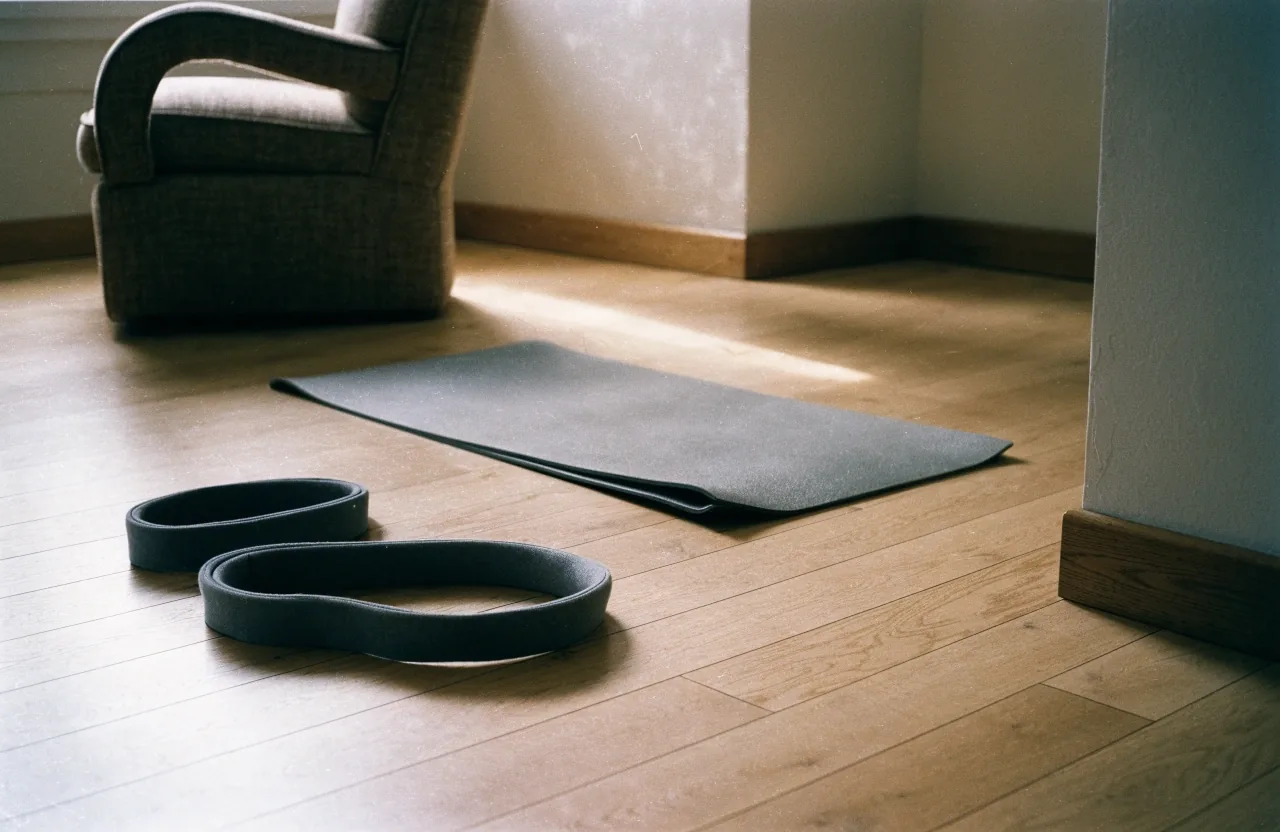
Cleared living-room floor with a mat and a sturdy chair within reach for a short movement session

Before you start

Two square metres of floor and something to hold for balance is all the kit you need. A wall, a sturdy chair or a kitchen counter works. Wear whatever you would wear around the house.

  • Move into each position slowly. A gentle stretch should feel like tension, not a sharp sensation — stop short of anything that registers as pain.

  • If you have an existing condition or a recent injury, check with a physiotherapist or your GP before starting. Treat this as a general routine, not a programme tailored to you.

  • Nothing here is compulsory and nothing is competitive. Half the volume done consistently is worth more than the full ten minutes attempted twice and abandoned.

The ten minutes, minute by minute

Four blocks in order. Do them where you are; the kitchen floor is fine. Small daily movement is the practical route to restore joint mobility — the sequence below is short on purpose.

Minutes one and two

Ankles and calves

Stand facing a wall with your hands on it and take one foot back, heel down, back leg straight. Hold for twenty seconds and swap. Then lift one heel and lower it slowly, ten times per side.

Ankles are the first thing to stiffen when you are on your feet all day or sitting for hours, and they are easy to overlook because the discomfort often shows up elsewhere. Doing this before your shoes go on makes it more likely to happen daily.
Minutes three to five

Hips

Lie on your back with knees bent and feet flat. Let one knee fall out to the side while the other stays put, then bring it back. Ten slow repetitions each side. Then, still on your back, hug one knee towards your chest for twenty seconds and swap.

Hips carry a lot of the load from sitting. Readers often find this is the part of the routine that changes how the first few steps of the day feel.

Minutes six to eight

Knees

Sit on a chair with both feet flat. Straighten one leg until it is level with your hip, hold for three seconds, and lower. Ten per side. Then stand and do a slow quarter squat against a counter, five times, keeping your knees over your toes.

Knees respond well to being moved through a full range under light load, which is why the seated extension and the shallow squat work better together than either alone. A knee pain solution is rarely a single exercise — this pair covers the range and the load.

Minutes nine and ten

Spine and shoulders

Finish standing. Roll your shoulders back five times, then reach both arms overhead and side-bend gently left and right, twice each way. Add a slow turn of the head to each side.

This is not a stretching block so much as a reset after the rest of the routine. If you have been at a desk, it is also the part you are most likely to repeat at lunchtime.

Making it stick beats making it perfect

Attach the routine to something you already do. Before your morning coffee, after you brush your teeth, or before you sit down for the evening. Ten minutes daily beats an hour on Saturday, and the routine you remember is the one that helps.

Set a timer for the first two weeks if you need to. After that it tends to run itself, and skipping a day matters far less than skipping a week.

Pairing movement with a capsule habit: two capsules with breakfast, then ten minutes on the floor. The routine is harder to forget, and you get a fixed point to judge from after a few weeks. Change one thing at a time — start a new product and a new routine on the same day and you will not know which one you are responding to.

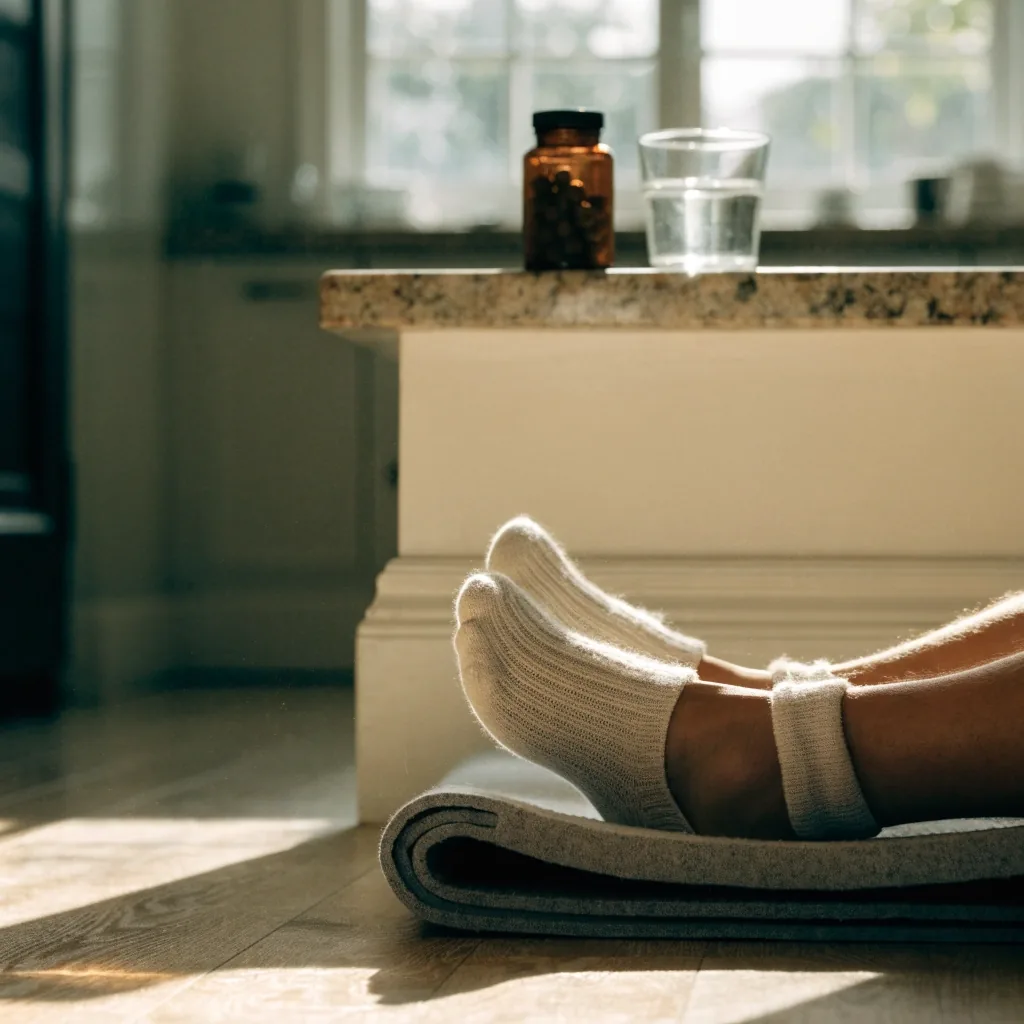
Unlabelled supplement tub and water on a kitchen counter beside a rolled exercise mat at breakfast

Capsules are a separate, optional input. Movement is the part you control directly, and neither replaces the other.

Reading the results honestly

What progress looks like

Not dramatic. Bending to tie a shoelace without thinking about it. Getting out of a low chair without pushing off. Walking downstairs in the morning without the usual hesitation. These small changes are the realistic markers, and they tend to arrive gradually rather than overnight.

Keep a note of one everyday movement you would like to be easier, and check it fortnightly. That is a more useful measure than how you feel on any single day — and it keeps expectations grounded in what actually changes.

Adjusting for your own limits

If the floor work is uncomfortable, do the seated versions only. If the quarter squat bothers you, hold the counter with both hands and go shallower. Nothing here is compulsory, and the routine works at about half the volume if that is what your week allows.

Readers with physically demanding jobs often do better with the ankle and hip sections and skip the rest. Adapt it, then keep the version you will repeat. If you would like a second opinion on where to start, you can send us your routine questions and we will point you at the closest section.

Questions that keep coming up

Short answers to the three things readers ask about the routine itself.

Can I do this routine twice a day?

Yes. Many readers repeat the ankle and hip sections in the evening. The full ten minutes once a day is the baseline; anything more is optional.

How long before the routine feels easier?

Most people notice the sequence itself becoming more comfortable within a couple of weeks. Changes to everyday movement tend to take longer and are more gradual.

Do I need a supplement to do this routine?

No. The routine stands on its own. A capsule is a separate, optional input, and neither replaces the other.

Pick your next step

The routine above is the movement half. When you are ready to look at the other half, the two comparison pages go through capsule formats and ingredient roles side by side.

Camber & Plumb Joint Mobility Guide · 42 Ludgate Hill, London EC4M 7DE, United Kingdom · Monday to Friday, 9:00 AM – 6:00 PM